Plenty of UK forex traders will tell you they always use a stop-loss. Far fewer use one properly. The gap between those two statements rarely shows up on a single trade; it shows up over a quarter, in the shape of a handful of losses that were larger than they needed to be.
A stop is not a prediction about where price will go. It is a decision you make in advance about where you were wrong. Get the mechanics wrong and it stops being protection — it becomes a way of paying the spread twice and getting shaken out of perfectly good trades.
You buy at the ask and sell at the bid. If you are long GBP/USD, your stop triggers off the bid, so the spread sits between your entry and your stop. A stop that looks ten pips away on the chart is often less than that in practice.
Spreads are not constant, either. On the majors they tend to be tightest through the quiet Asian hours and noticeably wider at the London open, around the 16:00 London fix, and in the seconds surrounding major data releases.
Two habits fix most of this:
If you deliberately trade news, look at whether your broker offers guaranteed stop-loss orders. They cost more, but they can remove the risk of being filled far beyond your level. Whether that trade-off suits your strategy is worth discussing with a regulated professional if you are unsure.
A ten-pip stop sounds disciplined. On EUR/USD in a quiet hour it can be reasonable. On GBP/JPY it is often just a donation — the pair can cover that distance while doing nothing meaningful at all.
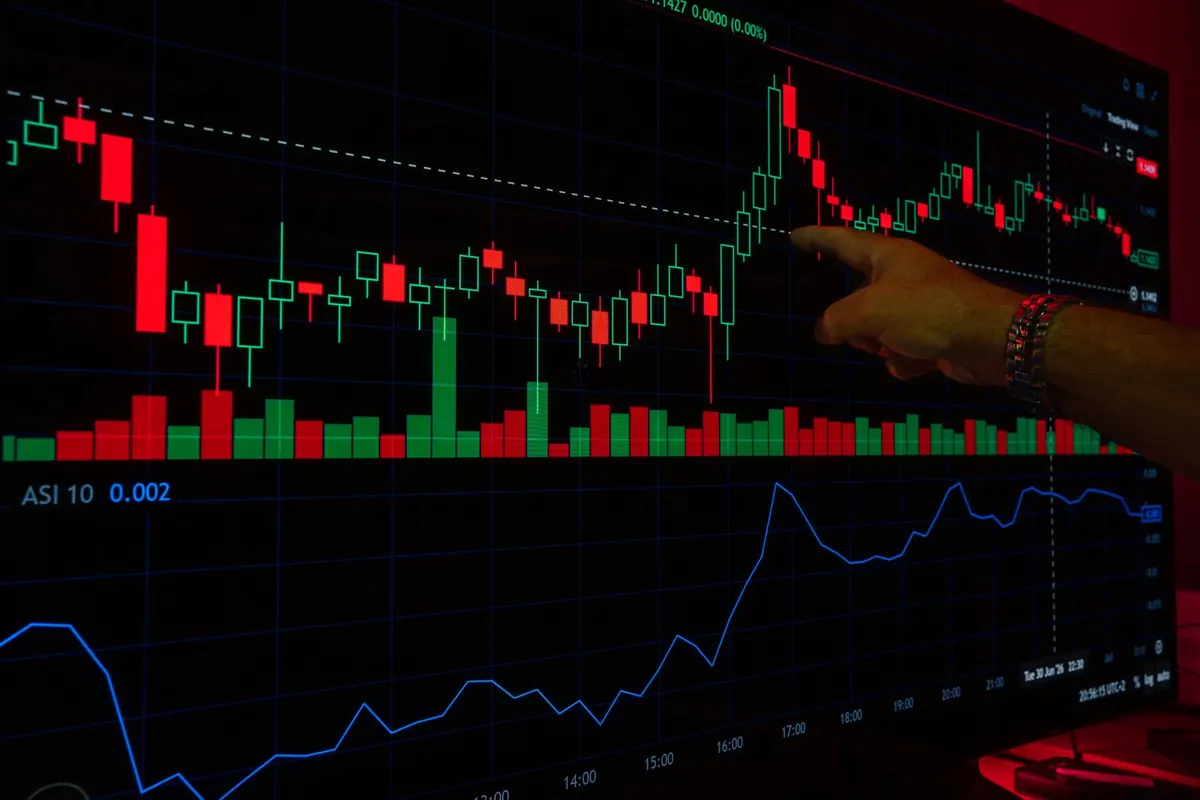
Before choosing a distance, look at how much the pair has actually been moving. Average true range over recent days is a decent rough guide, and so is simply glancing at recent candle bodies on the timeframe you trade.
Then place the stop where the trade idea genuinely dies:
Avoid obvious round numbers. Levels such as 1.2500 or 1.1000 attract orders and stop clusters, and price often probes them before deciding what to do next. Sitting ten or fifteen pips beyond is usually calmer ground.
There is a real difference between tightening a stop and widening one. Tightening — to break-even, or trailing behind a move — locks in progress and reduces risk. Widening does the opposite: it takes a loss you had already decided on and turns it into one you are improvising.
You know the thought. It only needs a bit more room. Repeated often enough, that thought is how a 1% risk becomes a 6% one. The market does not know where your stop is. The only person hurt by moving it is you.
A stop-loss is the price at which you accepted you were wrong. If you are not willing to be wrong there, the position size is too big.
A rule that works: your stop may only ever move in the direction that reduces your risk. If you feel the urge to widen it, treat that as information and close the trade instead.
Trading from the UK has advantages. The London session is the deepest part of the day and you are awake for it. It also means your stops sit inside the most violent part of the 24-hour cycle.
Volatility clusters in fairly predictable places: the London open, UK data around 07:00, US figures at 13:30 UK time, and the 16:00 London fix. A stop parked a few pips inside the range that typically expands at those moments will be taken out by movement with nothing to do with your analysis.
Practical options, in rough order of preference:
Then there is the weekend gap. A stop is an instruction, not a guarantee: if the market opens past your level on Sunday night, you are filled at the gap, not at your price. That is one more reason to size positions so a gap is survivable.
The most common version of this mistake is picking a lot size you feel comfortable with, then hunting for a stop that fits. It should work the other way around.
If you have £10,000 and risk 1%, that is £100. With a thirty-pip stop, you can afford roughly £3.33 per pip. If the resulting position feels too small to bother with, the answer is not a tighter stop — it is a better entry, or a different market.
Keeping the stop in your head feels flexible. In practice it fails for boring reasons: the broadband drops, the phone rings, you are on a train, or you simply talk yourself out of it at the worst possible moment. A stop that is not in the platform does not exist.
Two related habits are worth breaking. One is cancelling the stop the moment price approaches it. The other is setting a stop so far away that it is really just a hope dressed up as risk management. If the level would be painful to hit, the size is wrong — not the distance.
Run through this before you click buy or sell:
Get these right and a stop-loss stops feeling like a tax on trading and starts doing the one job it is good at: keeping a bad week from becoming a bad year. Nothing here is personal financial advice, so if you are unsure about risk, leverage or how your broker's orders behave in fast markets, speak to a regulated professional.