You’re scrolling through an online casino lobby at 2 a.m., bleary-eyed, wondering why the slot that paid out ten spins ago has gone colder than a Siberian winter. Meanwhile, your buddy swears he’s cracked the code on live blackjack, and some stranger on a forum claims he turned $50 into five figures on a single poker tournament. Welcome to iGaming — a world of adrenaline, math, and more than a few myths. If you want to play smarter, not just harder, this is your no-nonsense roadmap.
iGaming isn’t a single thing. It’s an ecosystem: online casinos, sportsbooks, poker rooms, bingo halls, and lottery-style games, all delivered through your browser or an app. The global market was valued at over $80 billion in 2023, and it’s not slowing down. But what does that mean for you, the player?
First, choice is overwhelming. A typical online casino might carry 2,000+ slots, dozens of table games, and a live dealer section that streams from studios in Malta or Latvia. Second, regulation varies wildly. In the U.S., states like New Jersey, Pennsylvania, and Michigan have fully licensed iGaming, while others remain grey. In Europe, the UK Gambling Commission and Malta Gaming Authority set strict rules. Always check the license — it’s your only real protection if a dispute arises.
Third, the line between casino and betting is blurring. Sportsbooks now offer casino games; casinos offer sports props. That convenience is great, but it also makes it easier to lose track of your bankroll. Set limits before you log in, not after.
Slots are the rock stars of iGaming. They’re simple, flashy, and can pay huge. But most players don’t understand the math. Every slot has a Return to Player (RTP) percentage — the theoretical amount returned to players over millions of spins. A 96% RTP means the house edge is 4%. That sounds small, but over 1,000 spins at $1 each, you’re mathematically expected to lose $40. More background can be found at slot depo 5k.
Here’s the kicker: RTP doesn’t guarantee a session outcome. Variance (volatility) determines how wild the ride is. High-volatility slots like Bonanza or San Quentin can go hundreds of spins without a win, then explode. Low-volatility slots like Starburst pay small but often. Neither is “better” — it’s about your tolerance for dry spells.
One more thing: bonus buy features. They let you pay 100x your bet for a shot at free spins. Tempting, but the house edge on bonus buys is often higher than the base game. Treat them as entertainment, not strategy.
If slots are a rollercoaster, table games are chess. Blackjack, roulette, baccarat, and craps each have distinct odds. Blackjack, played with basic strategy, can get the house edge down to 0.5%. Roulette? European wheel has a 2.7% edge; American wheel doubles it to 5.26% because of the extra 00. Baccarat’s banker bet has a 1.06% edge — that’s why high rollers love it.
Live dealer games add a human element: real cards, real wheels, streamed in HD. But they also come with higher minimum bets and slower pace. If you’re a beginner, start with software-based tables to learn the flow, then graduate to live. And please, don’t chase losses on roulette by doubling your bet — the Martingale system fails because tables have maximum limits and your bankroll isn’t infinite.
Never take insurance. It’s a suckers’ bet with a house edge of 5.9% or higher. And always split aces and eights.
Betting on sports is not the same as being a fan. Emotions cost money. The most successful bettors treat it like a market: they look for value, not certainties. Value means the odds imply a lower probability than you think the outcome has.
Example: You believe a team has a 60% chance to win, but the odds are +150 (implied probability 40%). That’s value. Conversely, betting a -300 favorite (implied 75%) when you think they’re only 65% likely is a losing proposition long-term.
Also, beware of “boosted odds” and free bet promos. They’re marketing tools, not charity. Read the terms — rollover requirements can be brutal.
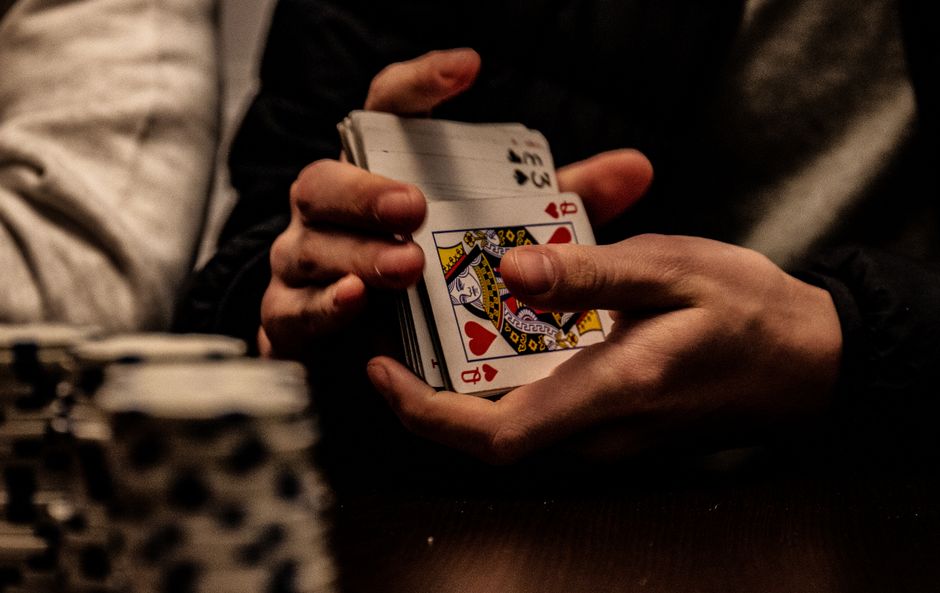
Poker is different. You’re not fighting the house (except for the rake). You’re fighting other players. That means skill matters — a lot. But it also means variance is brutal in the short term. Even the best players endure downswings lasting thousands of hands.
Online poker comes in three main flavors: cash games, tournaments (MTTs), and sit-and-gos (SNGs). Cash games reward patience and table selection. Tournaments reward aggression and ICM awareness. If you’re new, start with micro-stakes cash games or low buy-in tournaments. Learn the basics of position, pot odds, and range thinking.
One common mistake: playing too many hands. In a 6-max cash game, a solid player might voluntarily put money in the pot only 22-25% of the time. If you’re at 40%, you’re bleeding chips. Use a tracker like PokerTracker or Hold’em Manager — even the free versions — to plug leaks.
Another trap: the “I’ll just play one more hand” mentality. Set a stop-loss for the session. If you lose two buy-ins, walk away. The game will still be there tomorrow.
iGaming offers incredible entertainment, but it’s not a shortcut to wealth. The house always has an edge in casino games; sports betting is a grind; poker is a skill game with a high variance tax. The players who last are the ones who treat it as a hobby with a budget, not a income stream. Know the RTP, respect the variance, and never chase losses. Do that, and you’ll enjoy the ride a whole lot more — whether you’re spinning slots, sweating a parlay, or bluffing a river in a $5 tournament.